
 Argentina
 Brazil
 Canada
 Chile
Chile
 Colombia
 Ecuador
 Mexico
 Peru
Peru
 United States
 Israel
 South Africa
 Österreich (Austria)
 Belgique (Belgium)
 Croatia
 Danmark (Denmark)
 Deutschland (Germany)
 España (Spain)
 France
 Greece
 Ireland
 Italia (Italy)
 Luxembourg
 Nederland (Netherlands)
 Norge (Norway)
 Polska (Poland)
 Slovenia
 Suisse (Switzerland)
 Suomi (Finland)
 Sverige (Sweden)
 Türkiye
 United Kingdom
 Australia
 中国 (China)
 Hong Kong SAR
 India
India
 日本 (Japan)
 Malaysia
 New Zealand
 Philippines
 Singapore
 대한민국 (South Korea)
 ประเทศไทย (Thailand)
 Vietnam
How to train around your cycle

Do you know how much your menstrual cycle can impact your running and training plan? The answer is: a lot.
Many of us don’t understand exactly what our body goes through at each phase of our cycle, and that this impacts our running.
Fluctuation in hormones can impact everything from mood to energy levels, which means we’re not always performing to the same levels throughout the month. Understanding what your body is going through is vital knowledge to add to your training plan, as you’ll know when you can push yourself to your PB’s and when to listen to your body to take it slow.
The benefits of working out throughout your cycle:
It might feel tempting to stay home on the sofa during low energy moment of your cycle, but there are so many benefits to staying active and continue training.
As you move through your cycle, your body will have many fluctuations in terms of mood, bloating and energy levels. The end of the luteal phase and beginning of the menstrual phase are often times of cramps and bloating. But did you know that running and light exercise at these times can help with cramps, pain and bloating, and also lift your mood.
Have a read of the impact each phase of your cycle can have on your training plans, energy levels, and how to shift your running if needed, because your run during each phase of your cycle will be different.
Dr Arshad Rizvi says:
‘As a GP, one of the things I hear from women is “I just don’t have the energy to exercise right now” and honestly, that makes complete sense. Your cycle can bring fatigue, bloating, cramping and low mood that make lacing up your trainers feel like the last thing you want to do. But gentle movement is often one of the best things you can do.
The follicular phase (days 1–13, starting from the first day of your period) is when rising oestrogen means energy and motivation tend to pick up. A great time to lean into your runs and exercise a little more. Around ovulation (days 14–16) you may feel at your strongest, with endurance and performance at their best. Then comes the luteal phase (days 17–28). Progesterone rises, and fatigue, bloating and cravings can kick in. This is the time to ease off. A shorter run or a brisk walk still does the job and you’ll still feel the benefits: better mood, less bloating and improved sleep.’
Dr Arshad Rizvi works as an NHS and Private GP, with more advice from him on his Instagram.

Phase 1: Menstruation
This part of your cycle is the first phase and can often be the most challenging time for your body. It’s normal to be tired as energy levels are at their lowest, and this is the time when many women experience bloating and cramps. So, it’s completely normal not to want to get out there and run.
Getting out and staying active has been known to help with cramps as well as reducing any inflammation. You can stick to lower endurance activities that don’t put too much pressure or stain on your body. Mixing your runs with walks, or opting for swimming and slower yoga flows to help compliment any runs that your are doing.
Tips for running on your period
The most important part of running while you’re on your period is to make sure that you’re keeping yourself as comfortable as possible and listening to your body rather than using this time for interval or speed work.
You may feel more comfortable opting for specialist period underwear while you run and even switching to darker running leggings to help manage any concerns about leaks as well. Getting in some dynamic stretches before the run can help get you motivated and help with cramps before you go on your run as well.
Phase 2: Follicular
You might still be low energy but towards the end of this phase, your energy levels are going up and you’ll be excited to get out there and moving. Due to an increase in estrogen levels your energy is going to be high so now is a great time to do those high intensity runs, such as speed training or more challenging training you have set.
You should be able to run for longer now so this is a good time to go for that PB you’ve been chasing. Recovery is likely to be quicker and your muscle strength higher, so it’s a great to build muscle and strength train to compliment your running.
Phase 3: Ovulation
Your energy levels will be remaining high thanks to a peak in testosterone levels. Your athletic strength is also at a high, so continue with those high intensity runs and work outs. HIIT is a great compliment to your running at this time of your cycle too.
Phase 4: Luteal
It’s time again to slow down and take it easy. Your body is preparing for menstruating again, so your energy supplies are being used up as your progesterone levels increase.
You’ll be starting to feel more bloated again and your body temperature will increase making it tougher to feel comfortable for a run. It’s important to stay hydrated when you’re out for a run. Once again, switch to yoga and more lower intensity training to compliment your running, so you’re not putting too much pressure on your body.
Dr Arshad Rizvi continues:
‘Everyone’s cycle is different and these phases won’t look the same for everyone. It’s simply about tuning in to how you feel and finding what works best for you and your routine. Some movement will almost always leave you feeling better than none.
If you notice any changes to your menstrual cycle that concern you, whether that’s irregular periods, increased pain or anything that feels off, please don’t ignore it. Always reach out to your GP or healthcare provider.'
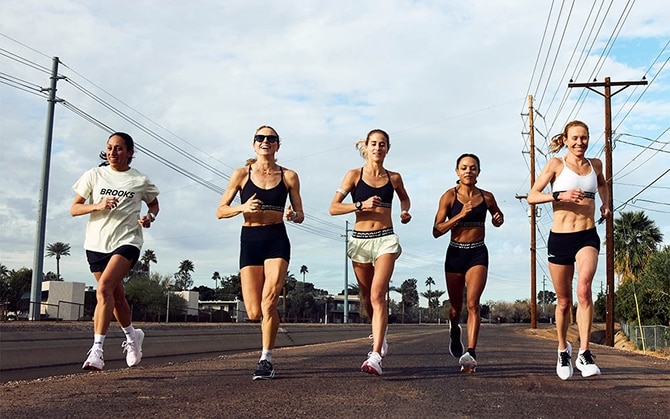
Listen to your body and do what feels right for you. Those with endometriosis, PCOS or other conditions with more severe pain will need more specialist medical advice, while others might feel ready to take on the world throughout their cycle. Particularly during times filled with cramps, bloating or cramps, staying active can help both physically and mentally.
Disclaimer: Our writer's advice is intended for informational or general educational purposes only. We always encourage you to speak with your physician or healthcare provider before making any adjustments to your running, nutrition, or fitness routines.