
 Argentina
 Brazil
 Canada
 Chile
Chile
 Colombia
 Ecuador
 Mexico
 Peru
Peru
 United States
 Israel
 South Africa
 Österreich (Austria)
 Belgique (Belgium)
 Croatia
 Danmark (Denmark)
 Deutschland (Germany)
 España (Spain)
 France
 Greece
 Ireland
 Italia (Italy)
 Luxembourg
 Nederland (Netherlands)
 Norge (Norway)
 Polska (Poland)
 Slovenia
 Suisse (Switzerland)
 Suomi (Finland)
 Sverige (Sweden)
 Türkiye
 United Kingdom
 Australia
 中国 (China)
 Hong Kong SAR
 India
India
 日本 (Japan)
 Malaysia
 New Zealand
 Philippines
 Singapore
 대한민국 (South Korea)
 ประเทศไทย (Thailand)
 Vietnam
Does slow running make me a bad runner?
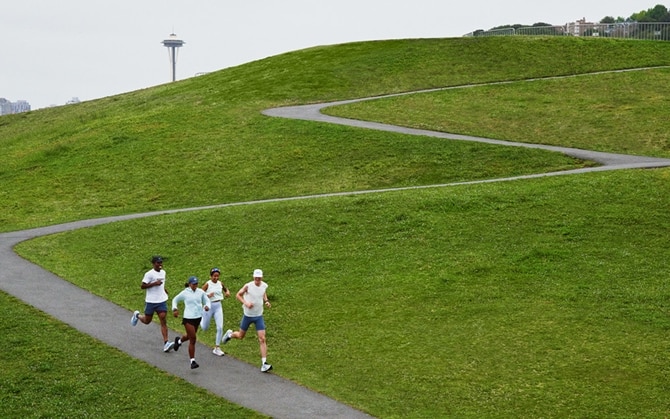
Looking at your Strava and Instagram feeds, you might think that all runners do are long races and chase PBs, but this isn’t always the case.
Not every run in your training plan needs to be record breaking, especially if you’re out for a long run. Sometimes just a simple jog to get out of your head can yield so many more benefits, playing an important role in training and recovery. In fact, adding in slow running can be one of the best tactics to add into your training plans.
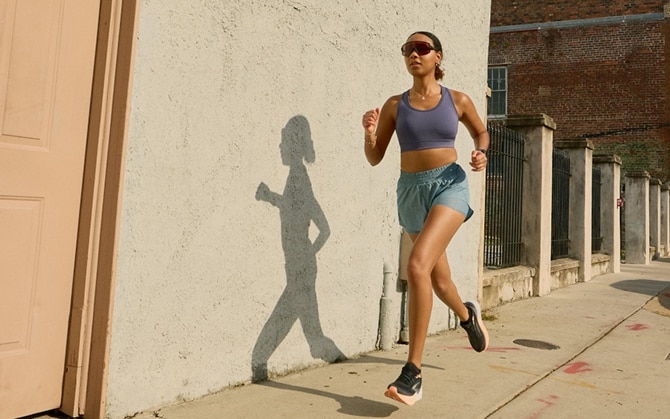
What is slow running?
Slow running is different per person and there isn’t a set pace on what the speed is, but more about effort. That’s why another way to look at it is a comfortable, easy and low effort pace, pushing yourself at about 4/10 in terms of effort. Conversational pace is a good indication that you are running low effort: making sure that you can hold a conversation with those around you, without getting out of breath. Essentially having a very controlled pace.
If you’re running outdoors, planning a slow run can help improve your mental health too. A run can simply be more enjoyable, going at a jogging pace to enjoy the outdoors. And if you’re running with others, that slower pace allows for a more sociable experience.
Don’t be worried about the Strava kudos and being overtaken. Take the run for what it is, to just enjoy the outdoors and do something for yourself. Consider even taking your watch off so you’re truly disconnected and in the moment.
"To me, focusing on myself and how I can make the run more enjoyable is way more fulfilling than chasing certain times. Running is all about proving to myself that I can do it, and I can do it with kindness to myself."
Benefits of running slow as an advanced runner
You may think slow running is something you do at the start of your journey as a beginner runner, but it is a good tactic for all runners, even if you've been running for years.
In fact, there are countless benefits to keeping slow running in your plans, no matter how advanced you are. While you might think, to get faster, you need to run fast but, and it might sound counterintuitive, slow running can actually help improve speed and build strength.
Running fast all the time can hinder progress as well as making you tired, particularly if you’re training hard 3x or more per week. You’ll be burning energy and the high impact runs will be taking its toll on your body and muscles, making it harder to reach your full potential.
Taking it slow between these fast runs helps to support recovery, reduce risk of injury, and help you keep your strength up, particularly in the run up to a big race. That’s why shake out runs are planned before big races, to help your blood flow, loosen muscles, and make sure you’re not too tired ahead of a marathon or half marathon.
Remember the 80/20 running rule: ensuring 80% of your training is easy and low intensity, while 20% should be higher intensity.
Going slow also allows you the time to focus on your run itself. Being able to think about how you breathe and your running form to ultimately help you become a better runner.

What about run-walk method?
Run-walk is another ‘slow running’ method that works really well. Rather than running at a quicker pace for your full run, breaking up your training with walking elements can also carry benefits. Run-walk training allows you to stay moving for longer, without abrupt stops, and can even help with race training. For example, you can add a 30 second walk between your running intervals. This can help for smoother transitions, keeping your energy up and also helping make sure you running intervals go faster. This can be really useful to build up your strength for race training.
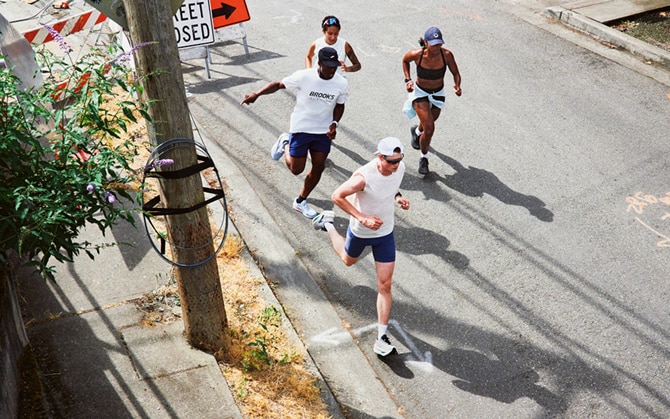
What shoes do I need for slow running?
With slow running or run-walks something with good cushioning, comfort and stability is important. Picking a dependable, everyday shoe, such as a Glycerin Max or the Ghost range are good options to try.
Try our Shoefinder to see which shoes work for you.
It’s important to know when to push and when to go slow as a runner. This can keep you healthy as well as making your runs more enjoyable. So next time you’re putting your training plan together, be sure to include some slow runs in here.