
 Argentina
 Brazil
 Canada
 Chile
Chile
 Colombia
 Ecuador
 Mexico
 Peru
Peru
 United States
 Israel
 South Africa
 United Arab Emirates
 Österreich (Austria)
 Belgique (Belgium)
 Croatia
 Danmark (Denmark)
 Deutschland (Germany)
 España (Spain)
 France
 Greece
 Ireland
 Italia (Italy)
 Luxembourg
 Nederland (Netherlands)
 Norge (Norway)
 Polska (Poland)
 Slovenia
 Suisse (Switzerland)
 Suomi (Finland)
 Sverige (Sweden)
 Türkiye
 United Kingdom
 Australia
 中国 (China)
 Hong Kong SAR
 India
India
 日本 (Japan)
 Malaysia
 New Zealand
 Philippines
 Singapore
 대한민국 (South Korea)
 ประเทศไทย (Thailand)
 Vietnam
What to know about running during pregnancy

Firstly, congratulations! Pregnancy is a time when there’s lots to be excited for and to look forward to. But it’s also a time where you may have a lot of questions, and an information overload.
Many women stop running when they find out they’re pregnant, but it’s something you can continue providing you stay safe and listen to your body. We will answer the following questions that might be on top of your mind:
- Am I allowed to run?
- How do you run while pregnant?
- When do I not continue my training plans?
- Can I still train for a race?
- Does running shake the baby?
- Should I start running while pregnant?
- What about running after I give birth?
- What tips do you have for pregnant runners?
- What are the best running shoes for pregnancy?

Can you run while pregnant?
The short answer for many runners is: yes, you can keep running during pregnancy, provided you consult with your doctors and midwife first. If you’re going through an uncomplicated pregnancy, not only can you continue to run, but it is encouraged. Running in pregnancy, is shown to help with both physical and mental elements of pregnancy, and even beyond, with long term health for you and your baby.
Our expert Dr Dewi Rogers: a GP based in Wales, with 10 years of medical experience, recommends:
“For most women with an uncomplicated pregnancy, staying active is safe for the baby and beneficial for the mother. We know that women who remain active during pregnancy have lower rates of complications such as gestational diabetes and high blood pressure. If you were running or exercising regularly before pregnancy, it is usually safe to continue at a comfortable level, provided you feel well and your maternity team have not advised otherwise.
If you were not previously active, pregnancy is not the time to suddenly start strenuous exercise. Begin with gentle activities such as walking or swimming and build up gradually. Avoid pushing yourself to exhaustion, you should still be able to hold a conversation while exercising.
Every pregnancy is different, so it’s always important to seek personalised advice from your own maternity team.”
If you’re a beginner runner or interested in exercise during your pregnancy, you may want to start with walking as an alternative.
How to run while pregnant
Your approach to running during pregnancy will depend largely on your fitness level before you conceived – if running is already a part of your routine, you likely don’t need to stop. Importantly, you should do what feels right for you and listen to your body – especially in the first trimester when you may be suffering from sickness and tiredness. Be forgiving to yourself if you can’t do what you were doing before and remember that some days may be tougher.
However, for beginners who have never run before, pregnancy is generally not the time to start a rigorous new running program. Instead, consider starting a walking routine or other low-impact exercises approved by your doctor.
The most important thing to remember is to stay hydrated and safe with your route and your body.
When do I not continue with my training plans?
Be wary of your centre of gravity, balance and remember that things are changing. Be more wary than you would be, particularly on trail runs, which offer more risk of uneven ground. Sticking to road or treadmill runs may be the safer option.
Trust your medical team as well. If there are complications in your pregnancy or you’re feeling off, speak to the team before carrying on. It may be a case of adapting your routine and slowing down more, especially as your pregnancy progresses.
As mentioned before, if you were active and training before, you’re able to continue with your current training plan. Listen to your body and stop if you feel uncomfortable.
Can I train for a race?
Yes. If you were running before and it’s a smooth pregnancy, you’re able to continue training, or sign up for a race. The most important thing to remember is that now is not the time to push yourself, test new boundaries or chase a new PB. You will need to make adjustments to focus on your body.
And you’re not alone. We have seen many pregnant runners compete during the Olympics over the years.

Does running while pregnant shake the baby?
No, running while baby doesn’t shake the baby. Your baby is securely nestled inside the uterus and is surrounded by amniotic fluid, which acts as a highly effective shock absorber. This natural cushioning protects the baby from the bouncing motion of running, meaning your job won’t harm them.
Should I start running while pregnant?
While running and training can have benefits throughout pregnancy, now is not the time to start something new or something you’re not used to.
If you want to make the most of staying active and get moving, you can try for lower impact alternatives, such as walking, prenatal yoga or swimming.
What about running after I give birth?
Every pregnancy is different, meaning every birth is different. While you want to lean on your medical team for advice, your body can take anywhere between 12 weeks to 6 months to heal, longer if there were complications during birth.
Running is a high impact activity and may cause your body more damage or a longer healing time if you do too much too soon. If you are keen to get back in to running, remember to be patient. Build up gradually by walking and doing run-walks first and work your way up to running.
And you can find more tips for running post pregnancy, as a new mum here.
Benefits of running in pregnancy
Staying active offers more than just fresh air – there are several benefits of exercising while pregnant, such as decreasing the risk of gestational diabetes and preeclampsia, while also helping to reduce back pain. Running and exercise can also help with labour and a faster postpartum recovery.
7 tips for pregnant runners
To keep your miles happy and healthy, try these adjustments to your running routine during pregnancy:
- Beat the heat: Overheating can be dangerous, especially in the first trimester. Stick to shady routes, run during the cooler parts of the day, and hydrate efficiently.
- Adjust your expectations: Your body is doing hard work growing a human. You’ll likely get slower, and your distances may shorten. That’s okay! Add walk breaks when you need them.
- Watch your balance: As your belly grows, your centre of gravity shifts, which can throw off your balance. Be mindful of your footing to avoid trips and falls.
- Monitor aches: The hormone relaxin loosens your ligaments to prepare for birth, which can make you more prone to injury. Pay attention to joint pain and adjust your gait or activity level accordingly.
- Keep strength training: Continuing a safe strength routine helps support your changing body and prepares your muscles for the physical demands of parenting.
- Know when to stop: Listen to your body. If running becomes uncomfortable, causes pain, or feels too taxing, it’s time to stop or switch to a lower-impact activity like walking or swimming.
- Ease back in postpartum: After the baby arrives, get doctor approval before running again. Your body has been through a marathon event, so be sure to treat your return like recovery from an injury: slow and steady.
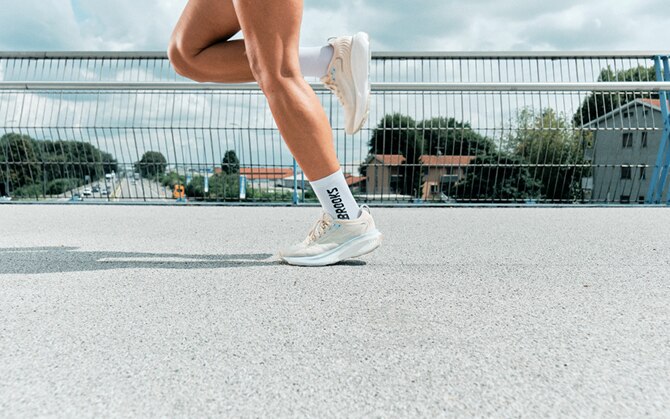
What are the best running shoes for pregnancy?
During pregnancy, your feet may swell. You’ll be carrying more weight and your aches can flatten due to ligament laxity. This means you might need a shoe that offers more room, cushioning and support than your pre-pregnancy pair.
To combat the additional weight – and to protect your joints – we recommend looking for cushioned or stability running shoes to offer the most support as your body changes. If you find your arches flattening or your ankles rolling inwards, a support shoe like the Adrenaline GTS can help keep your body aligned. Always consider getting measured at a local running shop, as your shoe size may increase during pregnancy.
Disclaimer: Our writer's advice is intended for informational or general educational purposes only. We always encourage you to speak with your physician or healthcare provider before making any adjustments to your running, nutrition, or fitness routines.